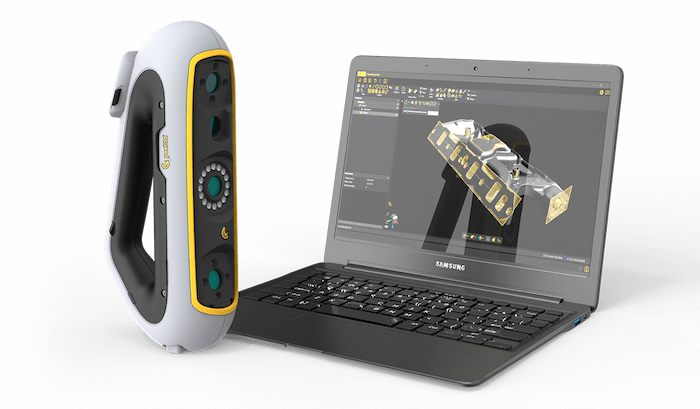
Restoring Historic Race Cars with Digital Engineering & passion
For many years, the work of Epicenter Design has focused on the design and manufacture of motorsport components, as well as the preparation, restoration, and track support of historic racing cars. A defining aspect of this field is the need to reproduce discontinued or one-off mechanical parts, often for vehicles where no original CAD files or technical drawings exist. These parts typically feature complex geometries, organic shapes, and tight functional tolerances, especially in suspension and chassis components. Furthermore, accurate reproduction of components is essential as it helps preserve the value of historic racecars.
The Challenge of Manual Reverse Engineering
Before integrating 3D scanning and digital measurement technologies into its workflow, reverse engineering was one of the most time-consuming and limiting aspects of Epicenter Design’s business. The process relied heavily on manual measuring tools, such as calipers and gauges. While effective for simple features, these methods struggled with freeform surfaces, cast components, and worn parts. Incomplete geometry capture and misalignment of critical features often led to expensive rework during machining or final assembly.
As demand grew for projects involving historic race cars and high-value mechanical components, it became clear that traditional methods restricted both productivity and scalability. Epicenter Design wanted to take on more complex reverse engineering projects while maintaining a high level of accuracy, repeatability, and confidence in the final results. That need became the turning point that pushed the company to look for a more efficient and future-proof solution.
Choosing the Right 3D Scanning Solution
When evaluating 3D scanning options, the main requirements were clear: the solution needed to be cost-effective, backed by strong technical support, and fully compatible with their existing CAD software, Solid Edge. They also needed reliable 3D data acquisition, capable of producing clean point clouds and high-quality mesh data that could easily be converted into CAD models.
These criteria ultimately led Epicenter Design to choose the Peel 3 handheld 3D scanner.
Integrating Peel 3 Into the Existing Workflow
Like any new technology, the initial implementation came with a learning curve, particularly in understanding the full range of scanning and data-processing tools available. However, the Peel 3D team provided excellent onboarding and ongoing support, which made the transition much smoother. After just a few projects, the team became comfortable using the software’s tools for mesh optimization, alignment, hole filling, and feature extraction.
Today, the Peel 3 is fully integrated into the company’s workflow and has completely transformed how it approaches reverse engineering and part restoration. Epicenter Design can now digitize parts quickly and accurately, generate manufacturing-ready CAD models in Solid Edge, and move confidently into CNC machining or additive manufacturing. The result is faster turnaround, higher accuracy, and greater reliability, especially when working with rare components.
Case Study: Restoring Historic Suspension Uprights
A clear example of this transformation is a project involving the restoration of suspension uprights for a historic sports racing car. Due to the age of the vehicle, no original drawings or CAD data were available, and the parts themselves showed signs of wear, deformation, and previous repairs. Traditional measurement methods would have been slow and unreliable.
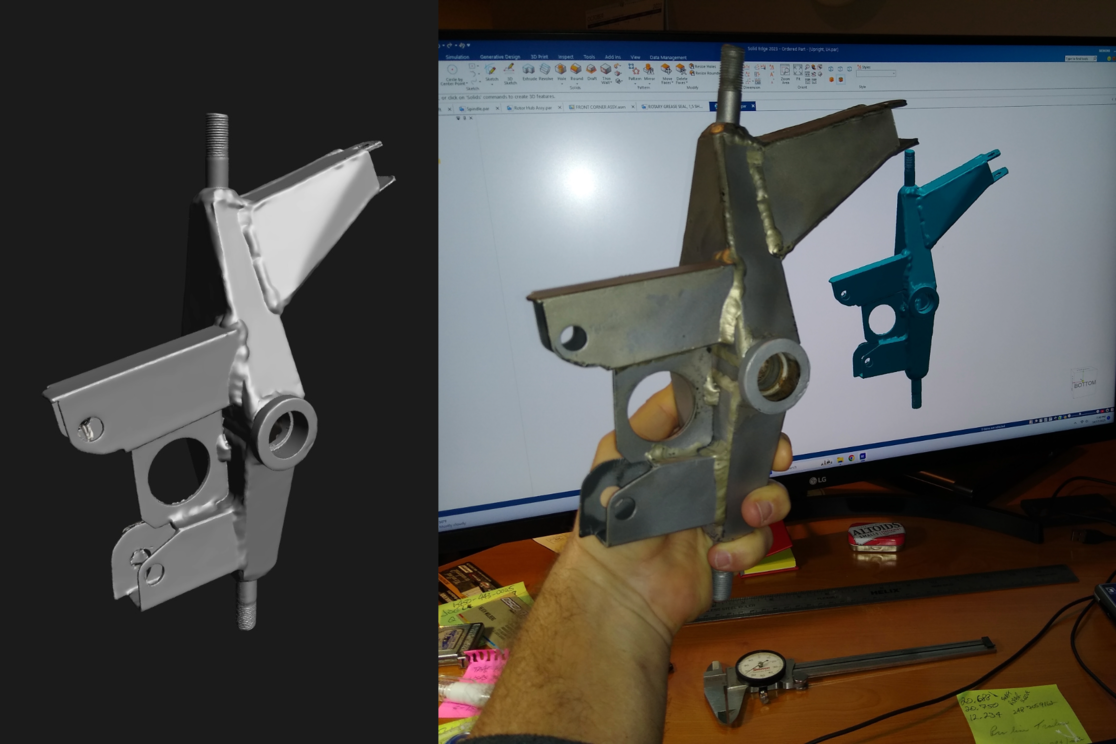
Using the Peel 3, Epicenter Design was able to capture the complete geometry of the suspension uprights with a high level of dimensional accuracy and repeatability. The scanner’s ability to generate high-resolution mesh data made it possible to faithfully digitize freeform surfaces, fillets, and functional features critical to suspension performance and alignment. The non-contact scanning process was especially valuable, as it eliminated any risk of damaging these fragile components.
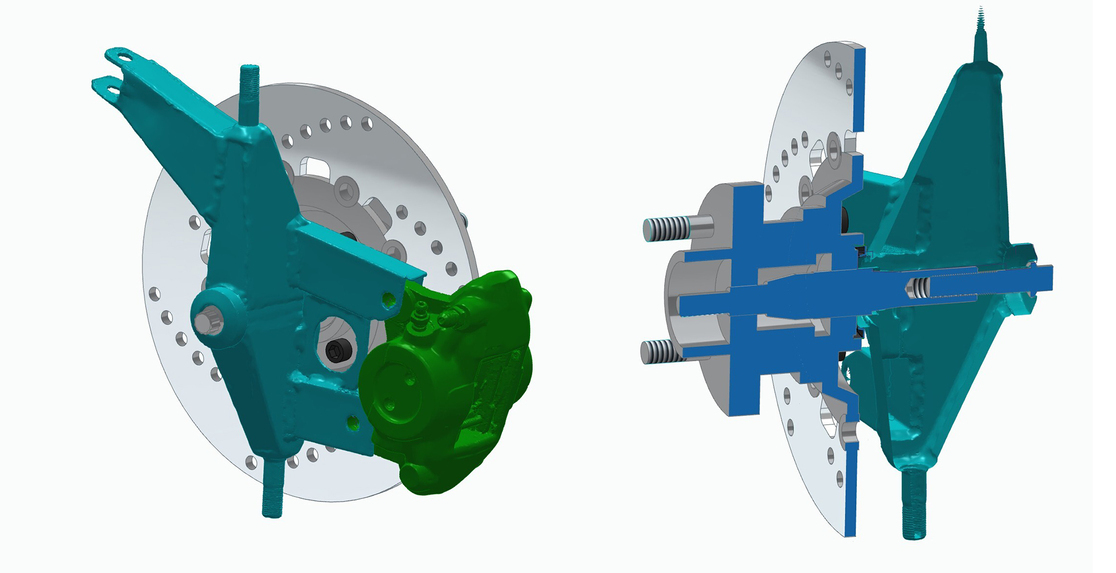
The scan data was seamlessly integrated into Solid Edge, where it was used for mesh-to-CAD conversion, surface reconstruction, and tolerance verification. This streamlined workflow significantly reduced the overall project timeline and resulted in production-ready models suitable for remanufacturing.
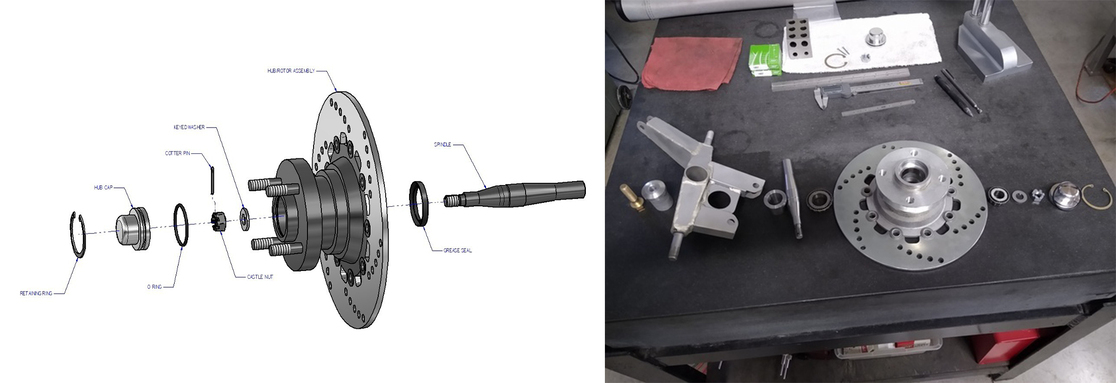
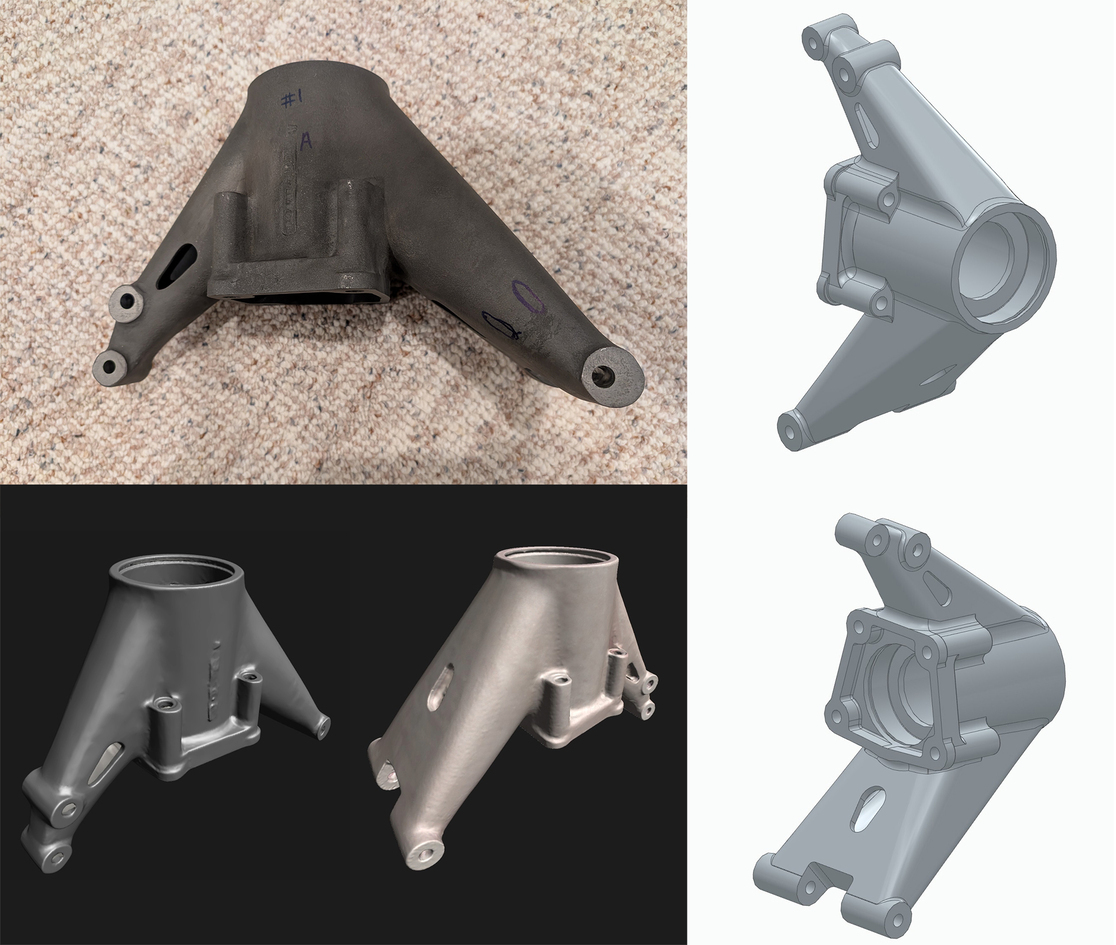
Another example is the suspension upright from a Lotus Europa race car. Accurately capturing this geometry using manual measurement methods would be both difficult and time consuming due to the part’s complexity. By scanning suspension uprights from both sides of the car, it was possible to restore the original symmetry, improving setup consistency while maintaining historical authenticity.
The first image shows the original physical part. The next two images display the scan data, and the final two images show the resulting CAD model derived from the scans.
Real-World Impact in Motorsport
Beyond restoration projects, Epicenter Design has proven invaluable in race-weekend scenarios, where time is critical, using its Peel 3. In one case, a damaged suspension component was scanned, reverse engineered, and CNC-machined within hours, allowing the driver to return to the track without missing a session.
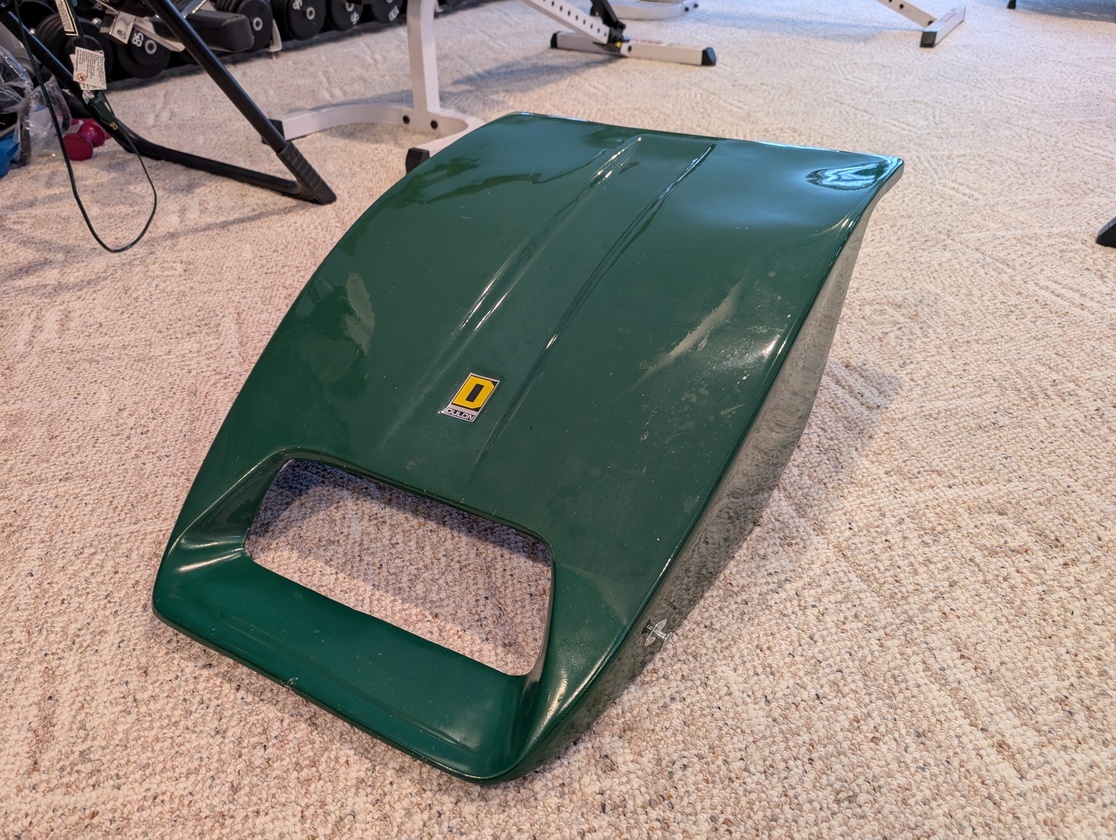
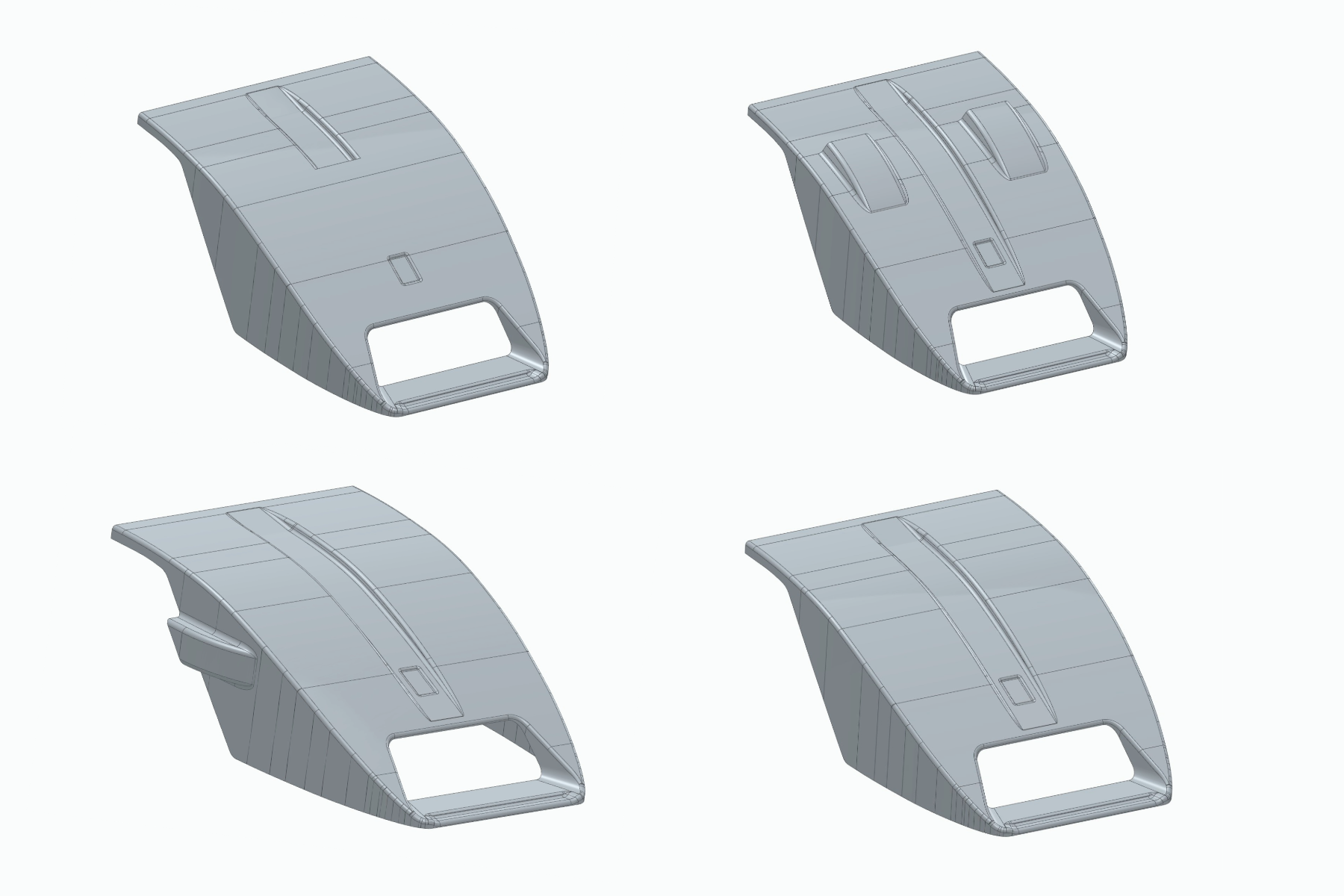
The images below show a fiberglass nose from a Formula race car. The customer’s objective was to capture the part’s geometry to preserve it digitally in the event of future damage. In addition, the customer wanted to evaluate potential design modifications for improving heat dissipation.
Three CAD models were developed. The top-left image shows the reverse engineered CAD model of the original part, while the remaining three images illustrate alternative venting concepts explored to address excess heat.
The scanner has also enabled the design of custom engine mounts, developed in CAD and validated through virtual fit checks within complex assemblies involving the engine, transmission, and suspension. This digital approach minimizes trial-and-error fabrication and ensures proper clearances before manufacturing.
A Tool to Rely On
The combination of measurement accuracy, usability, and support has made Peel 3 an indispensable part of Epicenter Design’s business. As Rob Ritt, owner of Epicenter Design, often says:
“The Peel 3D scanner is an essential part of my reverse engineering service, enabling fast, accurate digitization of complex mechanical parts for restoration and manufacturing.”
In historic motorsport, where precision, reliability, and respect for originality matter, 3D scanning has become a key enabler, allowing modern engineering tools to preserve the past while keeping race cars competitive and on track.
Wonder how Peel 3D can transform your work, solve problems, and save you time?
Contact our Peel 3D experts