Designing the Perfect Surfboard with 3D Scanning and CAD Tools
Surfboards have come a long way from handcrafted pieces of art to precision-engineered performance tools. Today, advanced technologies like 3D scanning and CAD modeling are reshaping the way surfboards are designed and manufactured. Let’s dive into the process and explore why implementing 3D scanning is a game changer for surfboard makers and surfers alike.
The Surfboard Manufacturing Process: From Design to Finish
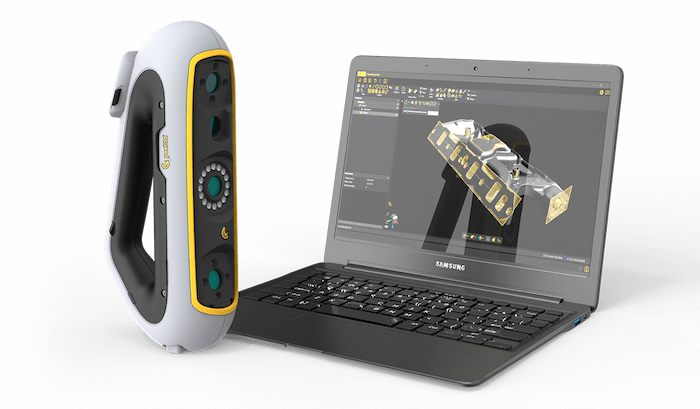
Using a 3D scanner to capture the surfboard’s shape and dimensions, combined with CAD software for 3D modeling, allows for precision and performance optimization. In the video below, you’ll see how easy it is to scan a surfboard using our Peel 3 scanner and Peel.CAD Pro software.
For this scan, the sticker targets were scanned and then optimized using Peel.OS Pro’s “Optimize Volumetric Accuracy” option. This ensures the best accuracy to prevent overlapping surfaces. Then the surface was captured with a resolution of 1 mm sized triangles. “Smart resolution” was used, which means there were automatically smaller triangles wherever more detail was required. The hole filling was set to 100% and the geometry and texture were finalized. After capturing the shape, basic alignments were applied, and a cross-section was created using entity tools. Based on those entities, a CAD model can be later created in Peel.CAD Pro or your preferred CAD software.
Once the design is ready, the next step is choosing the right materials. The core of the surfboard, called the blank, is typically made from polyurethane foam (heavier, paired with polyester resin), or expanded Polystyrene (EPS) foam (lighter, often paired with epoxy resin).
The blank is shaped into the desired outline either by hand (using planers, rasps, and sanding tools) or with CNC machines for maximum precision. After shaping, the board is laminated with fiberglass cloth and resin for strength and waterproofing.
Brands add custom graphics and logos, while professional surfers often request personalized designs. Finally, the board is sanded smooth, polished for aesthetics and protection, and fitted with components like fins and leash plugs before undergoing a final inspection for weight and balance.
Numerous benefits of implementing 3D scanning technology:
- Perfect Fit for Surfers – Boards are tailored to weight distribution, posture, and riding style for optimal fit.
- Performance Optimization – Shapes are fine-tuned for speed, stability, and maneuverability in different wave conditions.
- Digital Flexibility – Scanned models can be modified and tested in simulation software.
- Cost & Time Efficiency – Reduces trial-and-error with physical prototypes, saving materials and production time.
- Precision & Repeatability – Once perfected, designs can be replicated with exact accuracy.
- Seamless Integration – Works flawlessly with CAD tools and CNC machines for automated shaping.
- High Accuracy Ensures consistent quality and repeatability in production.
Ready to Explore?
The 3D model of the surfboard featured in our video is available for free download on our Sketchfab account (3D models by peel-3d.com - Sketchfab).
Want to learn more about how Peel 3D scanning can transform your design process?
Contact us today or request a demo!
Wonder how Peel 3D can transform your work, solve problems, and save you time?
Contact our Peel 3D experts